
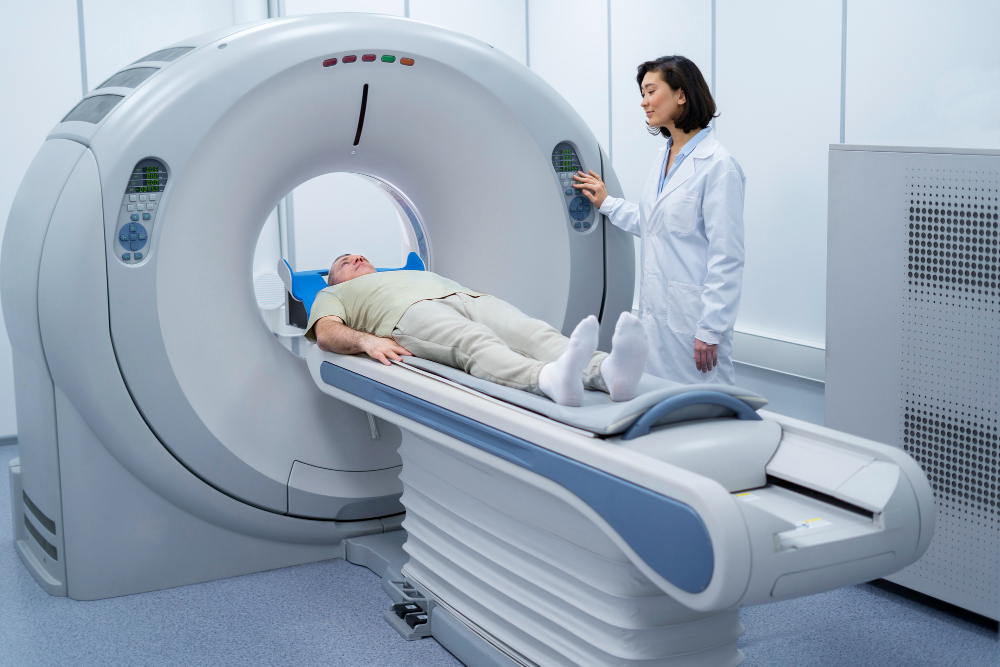
Many people wonder, “Why is a chest CT performed?” A chest CT scan is a common test that helps doctors see inside your chest. It can show details that regular X-rays may miss. Because of this, doctors often use chest CT scans to find or check many health problems. In this blog, you will learn what a chest CT is, why it is done, and what to expect during the test.
What is a Chest CT?
A chest CT, or computed tomography scan, uses X-rays and a computer to make detailed pictures of your chest. These images show your lungs, heart, blood vessels, and other parts inside your chest. Unlike a regular chest X-ray, a CT scan gives clearer and more detailed images. Therefore, doctors can spot small problems that might not show up on other tests.
Common Reasons for a Chest CT
Doctors may order a chest CT for many reasons. For example, they may want to:
In many cases, a chest CT scan gives answers when other tests are not clear. So, it is a helpful tool for doctors.
How a Chest CT Helps in Diagnosis
Because a chest CT shows detailed images, it helps doctors find problems early. For instance, it can spot small lung nodules or infections that a regular X-ray might miss. In addition, a chest CT can help doctors see how well treatment is working. If you have a known lung problem, your doctor may use chest CT scans to track changes over time. This way, they can adjust your care as needed.
What to Expect During the Procedure
Before the scan, you may need to change into a gown. Sometimes, you will be asked to remove jewelry or metal objects. Next, you will lie on a table that slides into the CT machine. The scan itself is quick and painless. Usually, it takes about 10 to 15 minutes. Sometimes, a special dye called contrast is used to help show certain areas better. If so, the dye may be given through a small needle in your arm. Most people feel fine during and after the scan. However, let the staff know if you feel worried or have any allergies.
Safety and Risks of Chest CT
Chest CT scans use a small amount of radiation. For most people, the benefits are greater than the risks. However, doctors try to use the lowest dose needed. If you are pregnant or think you might be, tell your doctor before the scan. The contrast dye is safe for most people, but some may have mild side effects, like feeling warm or a metallic taste. Rarely, people may have an allergic reaction. Always tell your doctor about any allergies or kidney problems before the test.
When Should You Consider a Chest CT?
Your doctor may suggest a chest CT if you have:
In some cases, a chest CT is the best way to find the cause of your symptoms. But, your doctor will decide if it is right for you based on your health and needs.
Conclusion
To sum up, a chest CT scan is a safe and helpful test. It helps doctors find and treat many chest problems. If you have questions or think you may need a chest CT, consult to learn if a chest CT is right for you.